
The Maverick Behind the Machines: Carroll Shelby's Enduring Legacy
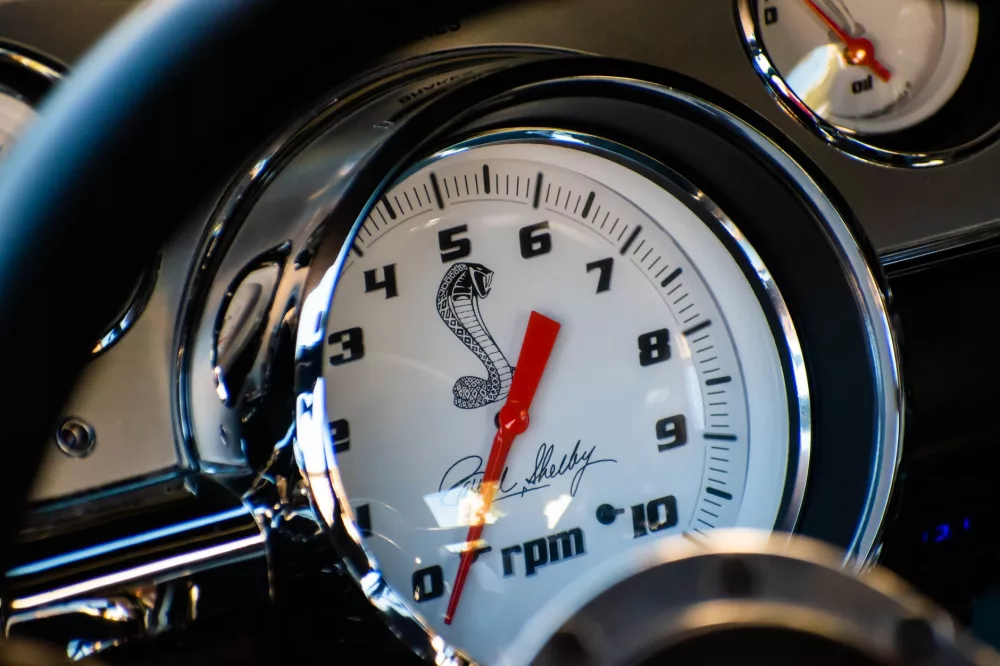
The Maverick Behind the Machines: Carroll Shelby's Enduring Legacy
You know, whenever I think about American automotive legends, one name consistently pops into my head: Carroll Shelby. He wasn't just some guy who put his name on a car; oh no, he was a force of nature. I mean, we're talking about a chicken farmer from Texas who went on to utterly reshape the high-performance car world. It's a truly wild story, and honestly, one that I find incredibly inspiring.
From Farm to Fast Lane: Shelby's Early Years and Racing Prowess
Carroll Hall Shelby, born way back in 1923 in Leesburg, Texas, didn't exactly start out with a wrench in his hand. His beginnings were pretty humble. He dabbled in everything from oil rigging to hauling timber before he got into farming chickens. And guess what? He was even good at that, running a successful operation for a bit. But the call of speed, it turns out, was far stronger than the clucking of hens.
His racing career kicked off relatively late, in the early 1950s, but man, did he make up for lost time! Shelby wasn't your typical polished, precise driver. He was aggressive, he was daring, and he had this uncanny ability to push a car right to its absolute limit, sometimes even a little beyond. He competed in just about everything: drag races, sports car events, and even Formula One. I've read stories where he'd show up at races, throw on some overalls, and just dominate the track. It wasn't about fancy suits or big sponsorship deals early on; it was pure, unadulterated talent.
- He drove for teams like Aston Martin and Maserati.
- He won the 1959 24 Hours of Le Mans, sharing the wheel of an Aston Martin DBR1 with Roy Salvadori. That's a huge deal, you know?
- His racing style was often described as intuitive and fearless.
It's important to understand that back then, racing was a brutal sport. Cars were less safe, tracks were unforgiving, and the drivers, well, they were a different breed. Shelby, with his signature Stetson hat often perched atop his head even in the cockpit, embodied that era's spirit perfectly.
A Heart's Burden: The End of an Era and the Start of Another
Tragically, or perhaps I should say, fortunately for us automotive enthusiasts, Shelby’s racing career was cut short by a serious heart condition. He was diagnosed with angina pectoris, a pretty severe form of heart disease. Imagine being at the absolute pinnacle of your career, winning the most prestigious endurance race in the world, and then being told your body simply can't handle it anymore. It must've been absolutely devastating for him. Doctors told him he needed to stop racing immediately. I can only imagine the frustration, but what he did next, that’s where the true genius lies.
Instead of wallowing, Shelby channeled that restless energy and competitive fire into something new: building his own cars. He couldn't drive them in major races anymore, but he sure as heck could make them. This period, for me, really highlights his incredible resilience and visionary thinking. He wasn't just a driver; he was an innovator, a businessman, and a provocateur.
The Cobra Rises: A Legendary Serpent is Born
This is where the magic really began. Shelby had a simple, brilliant idea: take a lightweight, European-designed AC Ace roadster chassis and shoehorn a powerful American V8 engine into it. Sounds straightforward, right? Well, the execution was anything but. He approached Ford, and they, seeing the potential, provided him with their new small-block 260 cubic inch V8. The first AC Cobra, chassis number CSX2000, rolled out of a small garage in California in 1962. It was a beast.
I've heard stories about how he'd take the prototypes out for test drives, often scaring the living daylights out of unsuspecting passengers. The Cobra was raw, it was loud, and it was ridiculously fast. It wasn't refined like a Ferrari, but it had this visceral appeal, this sheer power that nobody could ignore. It quickly started dominating tracks across America and beyond, giving European giants a serious run for their money.
He didn't just build the car; he marketed it like a true showman. He'd tell journalists wild tales and make outrageous claims, all to build the mystique around his cars. That’s what I call a true personality, someone who really knew how to create a buzz.
Taking on Ferrari: The Ford GT40 Project
Then came the battle for Le Mans. Ford, after a failed attempt to buy Ferrari, was absolutely furious and wanted to beat them at their own game: endurance racing. Who did they turn to to lead this monumental task? Carroll Shelby, of course! He took over the struggling GT40 project, which, let's be honest, wasn't doing so hot initially.
Shelby, along with his team, including brilliant minds like Ken Miles, transformed the GT40. They didn't just tweak it; they virtually reinvented it. They made it reliable, they made it faster, and most importantly, they made it a winner. My goodness, the intensity of that rivalry, you know, it's the stuff of legends. And in 1966, Shelby’s team, with Ford backing, achieved the unthinkable: a dominant 1-2-3 finish at the 24 Hours of Le Mans, finally vanquishing Ferrari. It was a moment of sheer triumph for American engineering and grit.
Beyond the Sixties: Shelby's Continued Influence
While the Cobra and the GT40 are probably what he's most famous for, Shelby's impact didn't stop there. He continued to work with Ford, developing iconic versions of the Mustang, like the Shelby GT350 and GT500. These weren't just appearance packages; they were serious performance machines designed to go fast and handle even better. I mean, who hasn't dreamed of owning a classic Shelby Mustang?
Later on, in the 1980s, he even teamed up with Chrysler and his old friend Lee Iacocca. He brought his performance magic to front-wheel-drive Dodge cars, creating some really hot hatchbacks and performance sedans like the Dodge Omni GLH (Goes Like Hell) and the Shelby Charger. People sometimes forget about that chapter, but it shows his versatility and his willingness to tackle new challenges, even when the automotive landscape was shifting dramatically. He had this incredible ability to spot potential and inject excitement into just about any platform.
A Philanthropic Heart and an Enduring Legacy
But Carroll Shelby wasn't just about speed and horsepower. He was also a remarkably generous man. After undergoing a heart transplant in 1990 and a kidney transplant in 1996, he established the Carroll Shelby Foundation. This foundation does amazing work, helping children in need of organ transplants and providing educational opportunities for young people. I think that often gets overshadowed by the cars, but it's a huge part of who he was.
He remained active in the automotive world right up until his passing in 2012, at the ripe old age of 89. He continued to produce new Shelby-branded vehicles, consult with manufacturers, and attend events, always with that twinkle in his eye and a story to tell. His legacy is incredibly diverse, encompassing:
- Revolutionary sports cars that redefined performance.
- A triumph at the most challenging race in the world.
- A commitment to philanthropy and giving back.
- An undeniable influence on American muscle cars.
When I look back at Carroll Shelby's life, I don't just see a car builder or a racer. I see a visionary, an entrepreneur, a survivor, and someone who never, ever gave up on his passion. He literally put his heart into everything he did, and that, in my opinion, is why his name continues to resonate so strongly in the automotive world today. He proved that with enough grit, ingenuity, and a little bit of Texas swagger, you really can achieve anything.
About Editorial Team
Senior columnist and culture critic specializing in architectural designs, emerging high-growth systems, and contemporary philosophies.